Why It’s Time to Replace Third-Party Call Tracking Apps with Direct ERP Integration
Stop paying high per-user fees for third-party call trackers. Learn why replacing apps like Callyzer and TeleCRM with a direct ERP integration saves costs, removes cloud dependencies, and secures your
If you manage a growing sales team, you know that tracking inbound and outbound calls is critical for performance monitoring and CRM accuracy. To solve this, many businesses turn to third-party telecalling apps and call trackers. Popular solutions on the market today include:
While these tools get the job done, they introduce two massive operational bottlenecks as you scale: exorbitant per-user recurring costs and an unnecessary dependency on third-party cloud servers.
The True Cost for 50 Users: Package Minimums and the Add-On
These platforms rely on recurring SaaS subscriptions where charges compound per SIM, per month. The base subscription rarely covers direct data sync—getting call logs into your ERP requires paying for premium tiers or dedicated API/Webhook add-ons. In addition, vendors often mandate upfront quarterly or annual commitments, making the barrier to entry steep.
Here is what the minimum total bill looks like when you onboard 50 salespersons and connect the data to your system:
| Platform | Base & Add-On Structure | Total Cost for 50 Users (Annual + ERP API Sync) |
|---|---|---|
| Callyzer | ₹175 base + ₹150 API/Webhook add-on per user/mo | ₹1,95,000 / year * (₹16,250 / month) |
| Runo | ~₹599/user/mo billed annually | ₹3,59,400 / year * (₹29,950 / month) |
| TeleCRM | ~₹799/user/mo billed annually | ₹4,79,400+ / year * (₹39,950 / month + integration) |
| Salestrail | Starts at ~$5.60 base + $4.90 CRM/Push API add-on per user/mo (Annual) | ~$6,300 (~₹5,40,000) / year * (~$525 / month) |
* Note: In addition to recurring software fees, ERP setup and integration costs are extra. Third-party trackers merely deliver raw data via webhooks, which still requires custom developer work inside your ERP to organize the logs, build dashboards, and link them directly to your leads or any other doctype.
The Takeaway: For a 50-person sales force, the absolute baseline expense starts at ₹1.95 Lakhs annually and easily scales past ₹4.79 Lakhs every single year. You are locked into paying indefinitely for external cloud middlemen just to push call metadata into your own database.
The Cloud Dependency & Webhook
Cost isn't the only issue. When you use these third-party trackers, you don't own the data pathway. Your sales team's sensitive call data (customer numbers, call durations, and audio recordings) takes a detour. It leaves the salesperson's phone, gets hosted on the app's cloud server, and then finally gets pushed to your ERP via Webhooks and APIs.
This "middleman" approach leads to:
- Data Privacy Risks: Your customer interactions live on a server you do not control.
- API Sync Failures: Webhooks can fail, leading to missing logs and mismatched CRM data.
- Latency: Delays in syncing mean managers aren't always looking at real-time data.
The Solution: Direct Mobile-to-ERP Integration
By replacing these third-party trackers with a custom application (like a lightweight Android agent synced directly to your Frappe / ERPNext server), you completely eliminate the middleman.
Architectural Comparison
The Cloud Dependency Path
📱 Salesperson (Mobile)
⬇️
(Sync over Internet)
☁️ Third-Party Cloud
(Callyzer / Runo / TeleCRM / etc.)
⬇️
(Webhook / External API Call)
🏢 Your ERP Server
Our Direct ERP Setup
📱 Salesperson (Mobile)
⬇️
(Direct Internal API Sync)
🏢 Your ERP Server
✅ No Middleman
✅ Zero Monthly Fees
✅ 100% Data Ownership
How We Built It: Native Mobile App & ERPNext Integration
We didn't just theorize this architecture—we built it. To give our clients complete control over their sales data without the recurring licensing fees, we developed a dedicated feature within our own mobile app that handles call tracking natively.
Our app runs in the background on the sales representative's device, capturing call events (incoming, outgoing, missed, and durations) in real-time without draining the battery or requiring manual data entry.
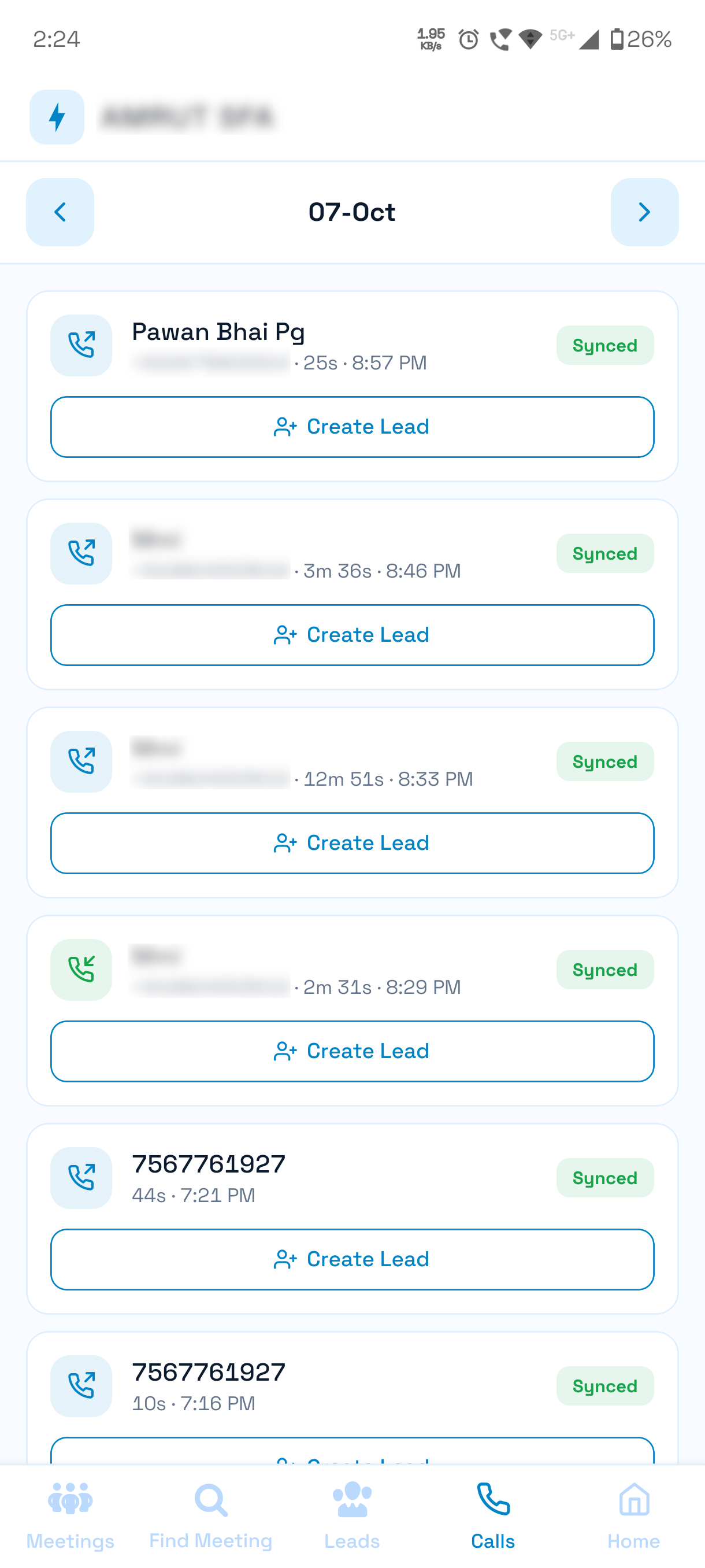
Our mobile interface capturing real-time call metrics on the edge.
Once a call is completed, the app bypasses third-party middleware entirely. It uses Frappe's robust REST API to push the call log directly into the ERPNext server. This means the moment a sales call ends, the data is instantly visible on the manager's dashboard, tied directly to the relevant Lead or Customer record.
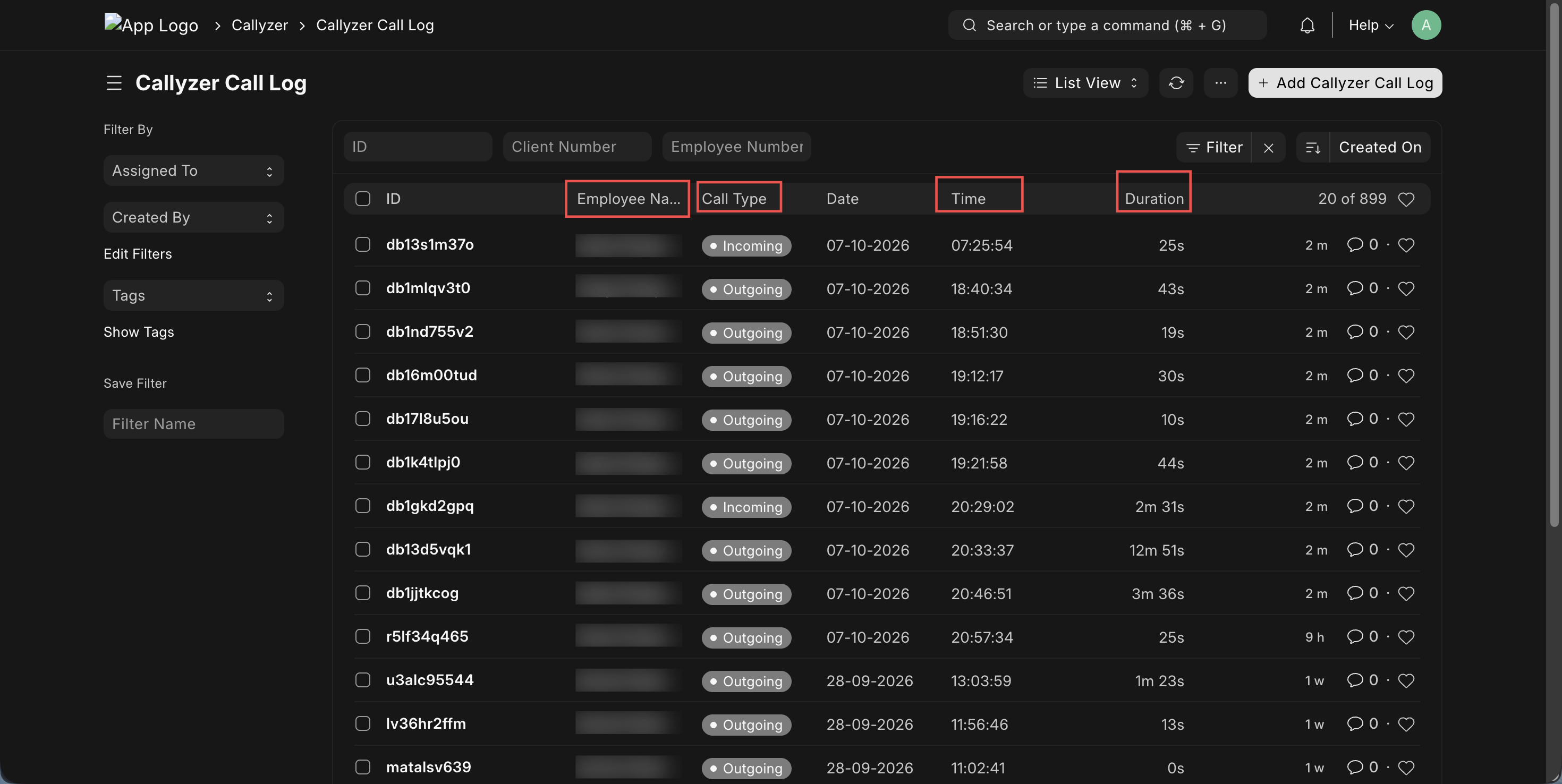
Call data synced instantly into the ERPNext Call Log list view—no webhooks, no delays.
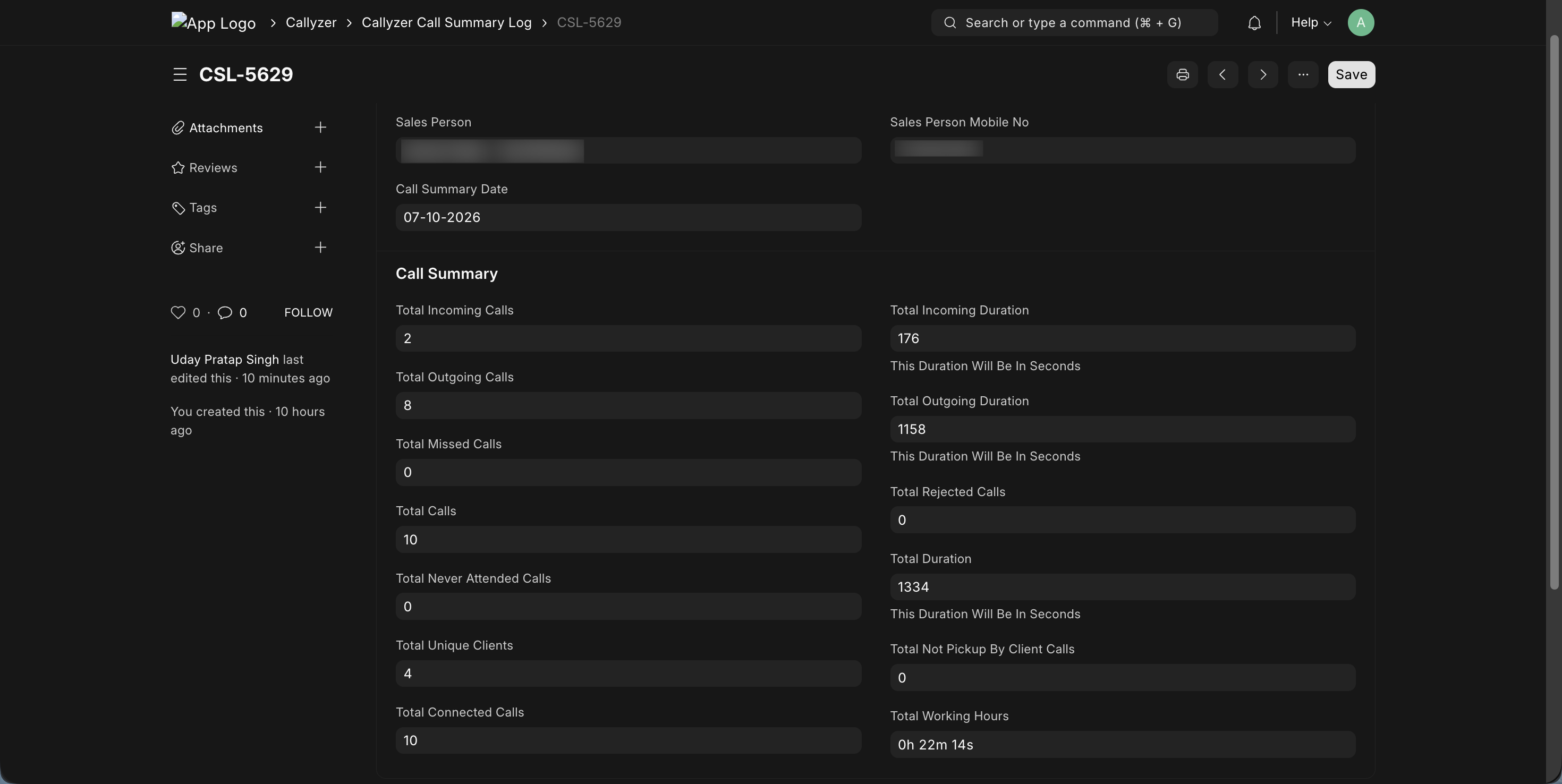
Automated Employee-Wise Daily Call Log Summary in ERPNext.
360-Degree Visibility: Call Summaries in the Lead Doctype
Pushing raw call logs into a list view is only half the battle. True CRM efficiency comes from seeing communication history in context. With our direct integration, we’ve mapped the call data directly into the ERPNext Lead doctypes.
When your sales manager opens a Lead, they don't just see contact details; they see a complete Call Log Summary dashboard right within the record. This includes total calls made, total duration, last contacted date, and the outcome of the most recent conversations—giving your team instant context without switching tabs.
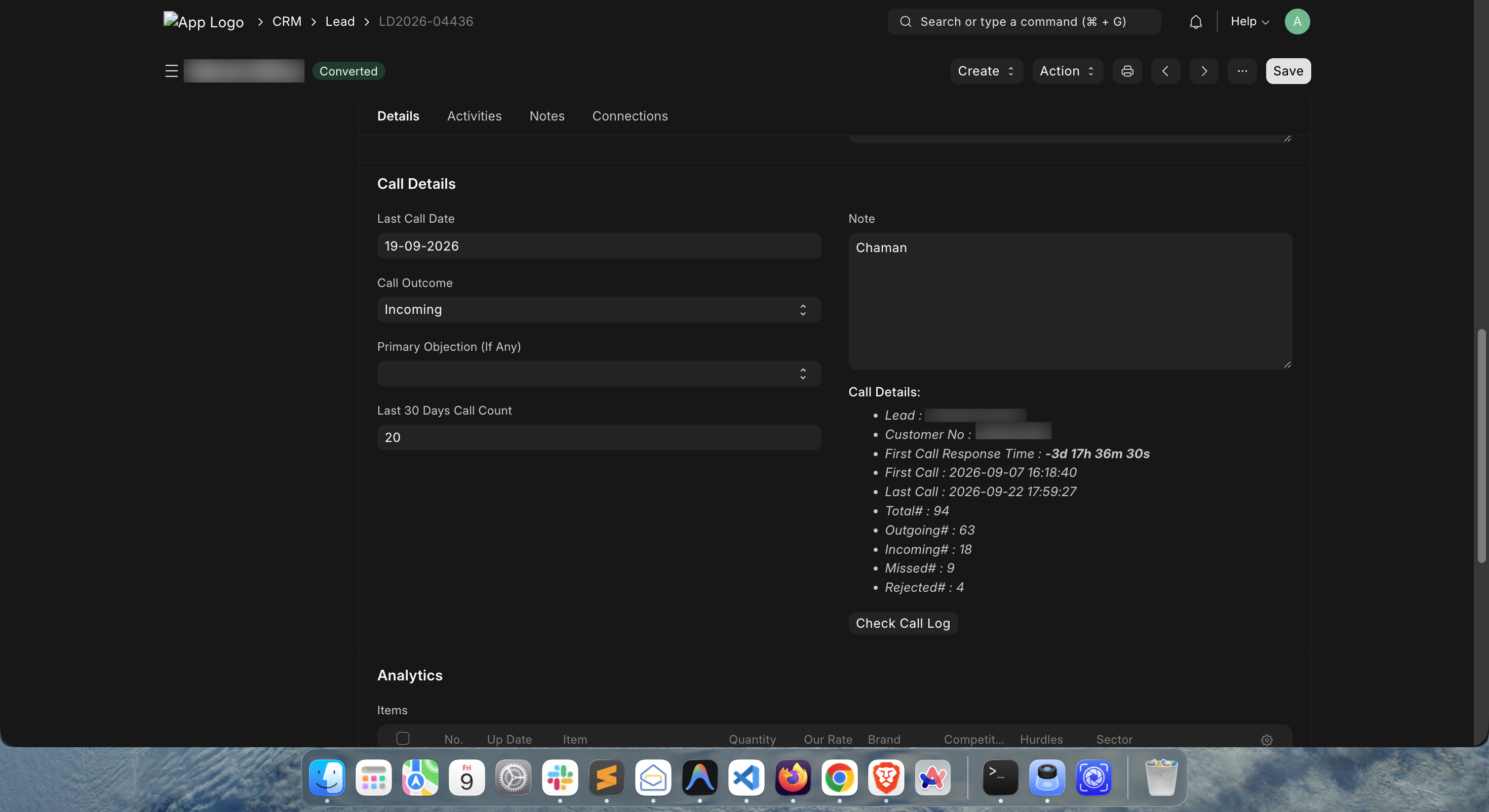
Get full context with the Call Log Summary integrated directly into the ERPNext Lead doctype.
Conclusion
Connecting your sales team's call data directly to your ERP server gives you a robust, highly secure architecture that scales infinitely without multiplying your software bill. By utilizing our custom app feature, cutting out the middleman doesn't just simplify your data architecture—it reclaims hundreds of thousands of rupees back into your IT budget every year, while keeping your data exactly where it belongs: on your servers.

No comments yet. Login to start a new discussion Start a new discussion