CompartmentS4 : Young Architects streamlined their Project Execution & HRMS via ERPNext
How Young Architects' Team @ Compartment S4 centralized project workflows, design operations , HR & Payroll through ERPNext & Frappe HRMS implementation.
How Compartment S4 Streamlined Project Execution, HRMS & Payroll Through ERPNext
As Compartment S4 continued scaling its architectural operations and project execution capabilities, managing projects, employees and payroll through disconnected workflows started creating operational bottlenecks. To build a more structured and centralized ecosystem, the organization implemented ERPNext across Projects, HRMS and Payroll — creating a connected operational framework that improved visibility, accountability and collaboration across teams.
Instead of operating through scattered spreadsheets, disconnected approvals and manual coordination, Compartment S4 transformed its day-to-day operations into a centralized digital workflow powered by ERPNext. From project planning and employee management to payroll processing and compliance tracking, every major operational function became more streamlined, transparent and scalable.
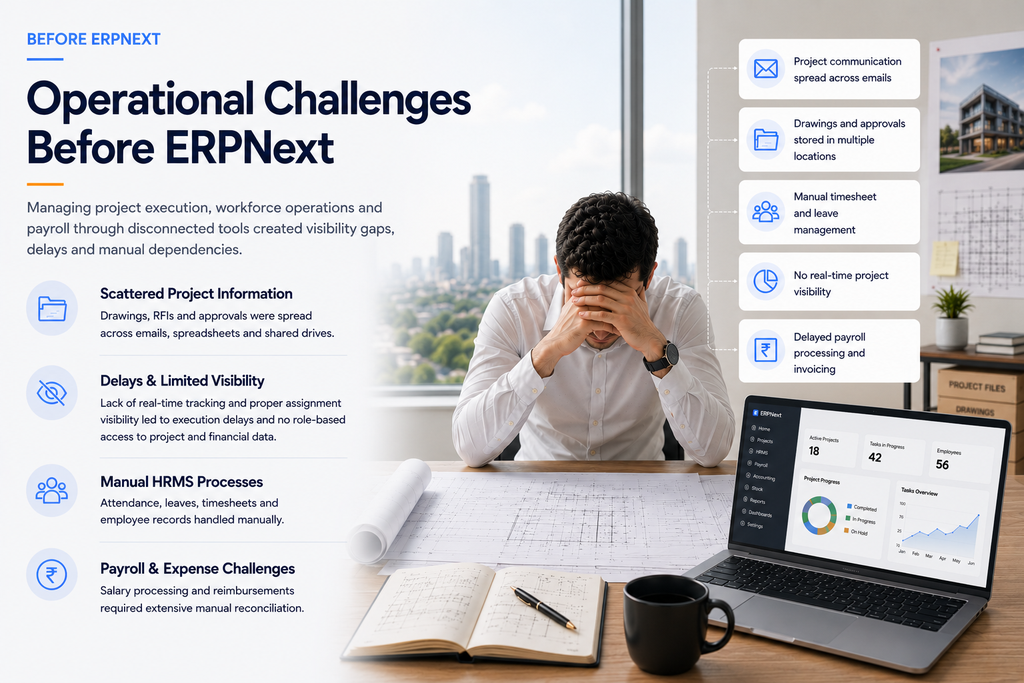
Operational Challenges Before ERPNext
As projects expanded and teams grew, managing operations across disconnected systems started affecting visibility, execution speed and coordination efficiency. Project teams, HR operations and payroll processing often relied on manual communication and fragmented workflows.
Project-related information such as drawings, consultant coordination, approvals, client discussions and execution updates were distributed across multiple channels. Teams often depended on manual follow-ups to track project progress, assignments and operational updates. This lack of centralized visibility made it difficult to maintain consistent execution control across projects.
Simultaneously, HR operations and payroll management involved repetitive manual coordination. Attendance tracking, employee records, leave approvals and payroll calculations required significant administrative effort, increasing dependency on spreadsheets and disconnected processes.
Leadership also faced challenges in obtaining real-time operational insights. Since projects, workforce operations and payroll data were not connected within a unified ecosystem, decision-making often lacked centralized visibility and reporting consistency.
Building a Unified Operational Ecosystem with ERPNext
Through our ERPNext implementation, we helped CompartmentS4 connect project execution, workforce management and payroll operations into a single structured platform that could scale efficiently with business growth.
Centralized Operations
We implemented ERPNext to create a unified operational environment where projects, employees, attendance, payroll and reporting could be managed from a single platform instead of multiple disconnected systems. This improved coordination across departments while creating better operational visibility for leadership teams.
Structured Workflow Automation
Standardized workflows were configured to automate approvals, task assignments, attendance processes, payroll calculations and employee coordination, helping reduce operational dependency on manual follow-ups and repetitive administrative tasks.
Role-Based Visibility & Control
We implemented role-based access controls within ERPNext to ensure that employees, managers and leadership teams could access only relevant operational data while maintaining security for sensitive financial and payroll information.
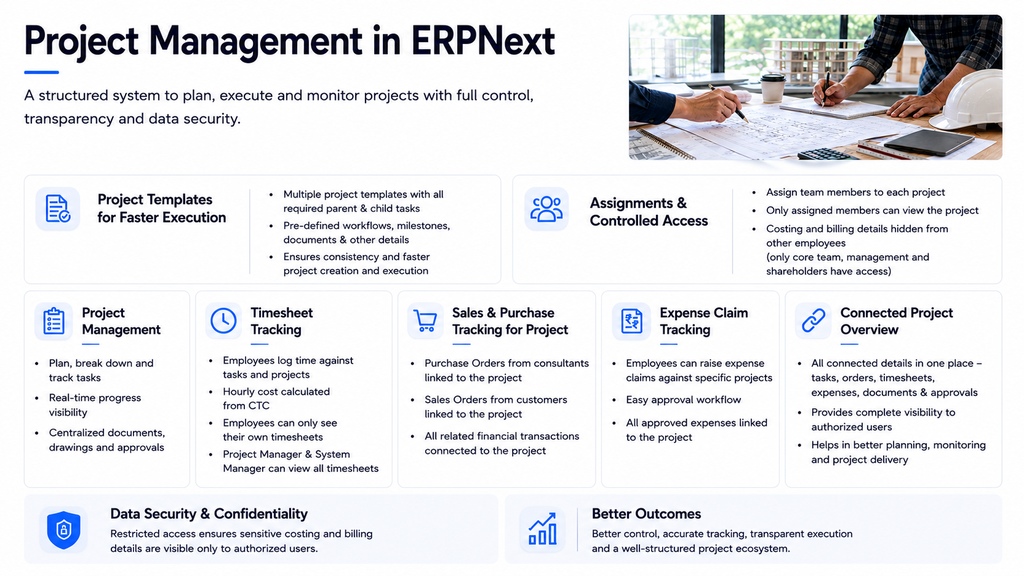
Transforming Project Management & Execution
Through our ERPNext implementation, we helped Compartment S4 establish structured project execution workflows with better visibility, centralized coordination and improved operational accountability.
One of the biggest operational transformations came in project execution management. Instead of handling projects through disconnected coordination methods, we implemented structured project workflows within ERPNext to centralize planning, assignments and execution tracking across teams.
We configured standardized project templates with predefined parent and child tasks, allowing teams to create projects faster while maintaining execution consistency across multiple operational stages. This helped reduce repetitive setup activities while improving workflow standardization across departments.
Through ERPNext, project managers gained centralized visibility into assignments, timelines and execution progress. Employees could submit timesheets directly within the system, enabling management to monitor project activities, resource utilization and operational workloads more effectively.
We also connected customer sales orders, consultant purchase orders and employee costing within the same ERPNext ecosystem. This improved project-level financial visibility while helping leadership teams better insight into execution costs, workforce allocation and operational dependencies across ongoing projects.
Standardized Project Execution
We implemented structured parent-child task templates to simplify project planning while ensuring execution consistency across teams and departments.
Integrated Cost Visibility
Employee costing, consultant expenses and operational tracking were connected directly with ongoing projects through ERPNext.
Real-Time Operational Monitoring
Managers gained better visibility into assignments, project progress, timesheets and resource utilization from a centralized dashboard.
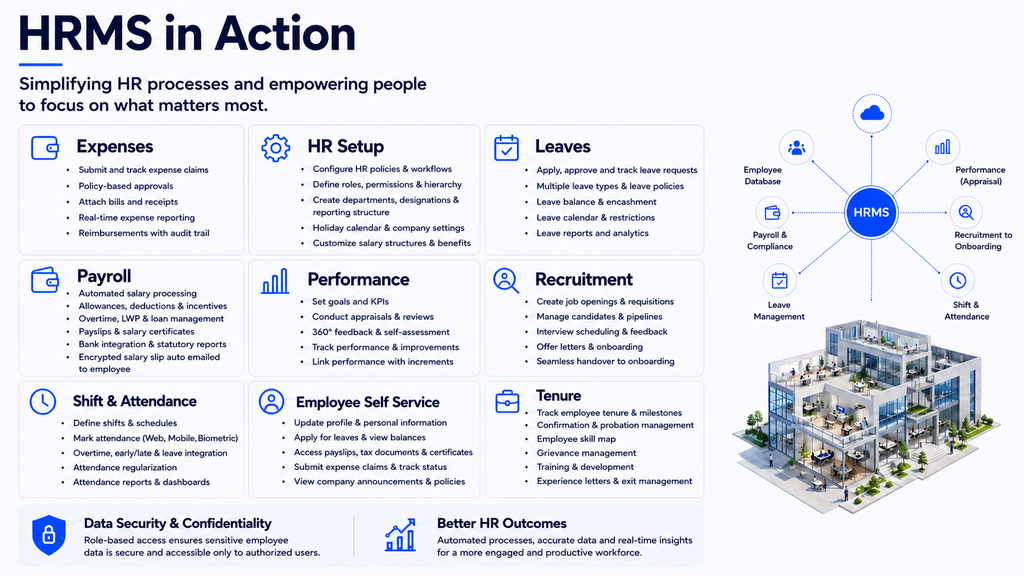
Streamlining HRMS & Workforce Operations
Beyond project execution, ERPNext helped Compartment S4 centralize workforce operations, employee management and HR processes into a more structured and scalable system.
We implemented a centralized Frappe HRMS environment covering recruitment, onboarding, attendance tracking, employee records and appraisal workflows. This reduced administrative dependency on manual coordination while improving workforce transparency and operational consistency across departments.
Employees could apply for leaves, access records and interact with HR workflows through structured approval systems. Attendance management and shift planning also became more organized, enabling HR teams to maintain better workforce visibility and streamline day-to-day employee operations.
The implementation additionally helped standardize employee lifecycle management by centralizing employee documentation, organizational structures, tenure tracking, employee skill mapping, grievance management and training workflows within a single connected platform.
Centralized Employee Lifecycle Management
Recruitment, onboarding, employee records and workforce management workflows became more structured, centralized and easier to manage through ERPNext.
Improved Workforce Visibility
Attendance, shifts, leaves and appraisal tracking provided HR teams with better operational visibility and improved workforce coordination across the organization.
Connected Employee Experience
Employees gained access to streamlined HR processes through centralized workflows, reducing delays, improving communication and enhancing operational efficiency.
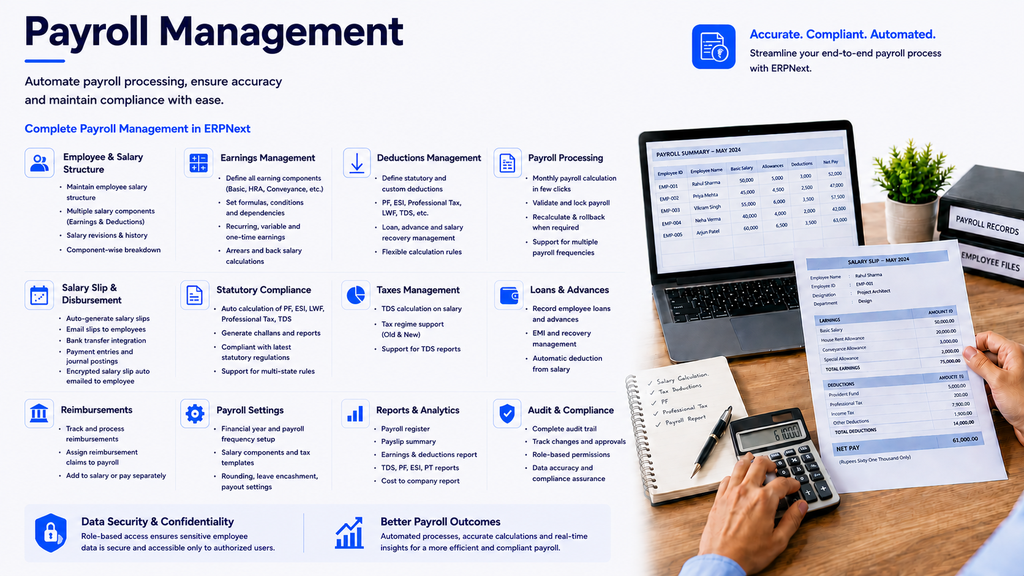
Payroll Automation & Compliance Management
ERPNext enabled Compartment S4 to streamline payroll processing, compliance tracking and employee cost management through centralized payroll workflows.
Prior to ERPNext, payroll operations involved significant manual coordination across attendance, salary structures, reimbursements and employee calculations. We implemented structured payroll workflows within ERPNext to centralize payroll management, improve processing efficiency and reduce operational dependency on repetitive manual tasks.
Salary structures, earnings, deductions and statutory compliance calculations were managed centrally, ensuring better payroll accuracy and operational consistency across departments. Employees could receive encrypted salary slips automatically through the system while HR and finance teams maintained secure access control over sensitive payroll information.
Since payroll workflows were integrated with attendance management and employee costing, leadership teams also gained improved visibility into workforce expenses, payroll operations and project-related costing insights.
Faster Payroll Processing
- Automated payroll workflows
- Reduced administrative effort
- Faster salary processing
- Improved operational efficiency
Compliance & Payroll Accuracy
- PF, ESI, PT & TDS management
- Automated compliance workflows
- Improved payroll accuracy
- Simplified statutory reporting
Secure Payroll Visibility
- Role-based access control
- Centralized payroll reporting
- Enhanced data security
- Controlled information visibility
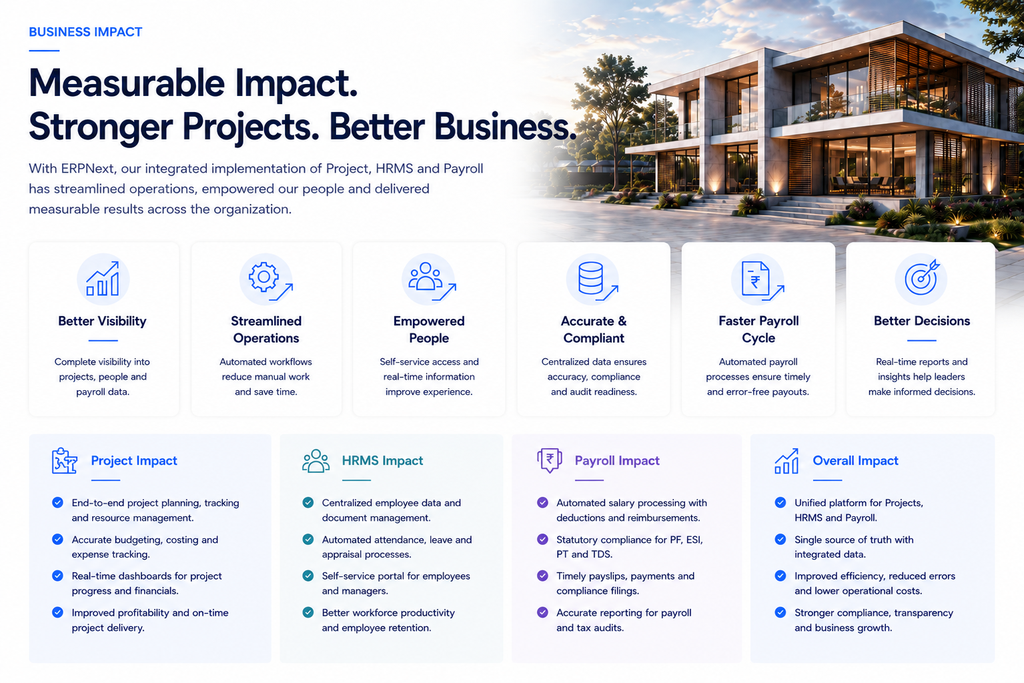
Business Impact After ERPNext Implementation
By connecting Projects, Frappe HRMS and Payroll into a unified ERPNext ecosystem, Compartment S4 established a more scalable, transparent and operationally efficient business environment.
The implementation significantly improved operational visibility across departments. Leadership teams could monitor project execution, workforce operations and payroll activities through centralized dashboards and structured reporting systems.
Teams experienced improved coordination, faster execution workflows and reduced dependency on manual tracking. Employees benefited from more streamlined HR and payroll interactions, while management gained better control over operational planning and decision-making.
Most importantly, ERPNext helped Compartment S4 build a connected digital operational framework capable of supporting long-term organizational growth while improving transparency, accountability and process consistency.
Project Transformation
We implemented structured project workflows within ERPNext to improve execution visibility, project coordination and integrated costing across ongoing operations. Teams gained better control over assignments, timelines and resource utilization through centralized project management.
Workforce Optimization
Centralized HRMS operations streamlined attendance, onboarding, employee management and workforce collaboration while improving operational consistency and employee coordination across departments.
Payroll Efficiency
We automated payroll workflows within ERPNext to improve payroll accuracy, reduce manual effort and strengthen statutory compliance management through centralized payroll operations and secure access controls.
No comments yet. Login to start a new discussion Start a new discussion